


Weight Loss: The Complete Guide to Losing Weight Naturally
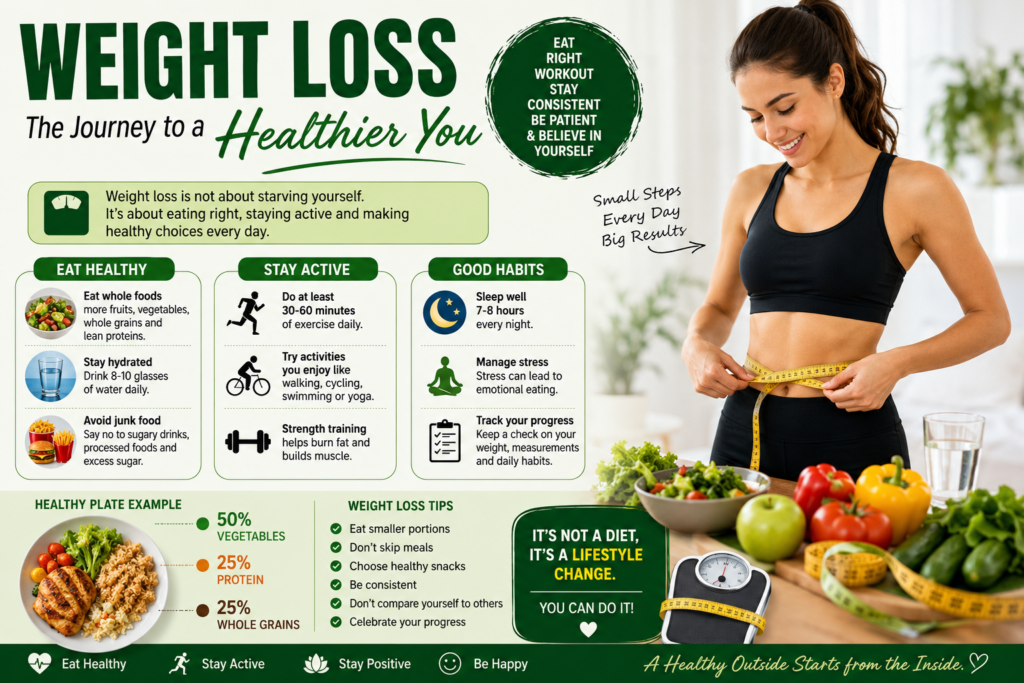
Weight loss is one of the most common health goals today. Whether you want to improve your appearance, boost your confidence, or reduce the risk of diseases, losing excess weight can significantly improve your quality of life.
The good news is that healthy weight loss doesn’t require starving yourself or following extreme diets. By making small but consistent lifestyle changes, you can lose weight naturally and keep it off permanently.
In this guide, you’ll learn everything you need to know about effective weight loss.
What is Weight Loss?
Weight loss means reducing your total body weight by burning more calories than you consume. This process is known as creating a calorie deficit.
Healthy weight loss focuses on reducing body fat while maintaining muscle mass through:
- Balanced nutrition
- Regular exercise
- Proper sleep
- Stress management
- Healthy daily habits
Common Causes of Weight Gain
Several factors contribute to unwanted weight gain:
- Overeating
- Sugary drinks
- Fast food
- Lack of physical activity
- Poor sleep
- Stress eating
- Hormonal imbalance
- Slow metabolism
- Excess alcohol consumption
- Certain medications
Understanding the cause helps create an effective weight-loss plan.
Best Foods for Weight Loss
A healthy diet is the foundation of successful weight loss.
1. Lean Protein
Protein keeps you full for longer and helps preserve muscle.
Examples include:
- Eggs
- Chicken breast
- Fish
- Lentils
- Beans
- Greek yogurt
- Tofu
2. Vegetables
Vegetables are low in calories and high in fiber.
Best options include:
- Spinach
- Broccoli
- Cabbage
- Cauliflower
- Cucumber
- Bell peppers
- Carrots
3. Fruits
Choose fruits with natural sugars.
Good choices:
- Apples
- Berries
- Oranges
- Papaya
- Watermelon
- Pears
4. Whole Grains
Replace refined carbohydrates with whole grains.
Examples:
- Oats
- Brown rice
- Whole wheat bread
- Quinoa
- Millets
5. Healthy Fats
Healthy fats improve metabolism and support overall health.
Eat in moderation:
- Almonds
- Walnuts
- Chia seeds
- Flaxseeds
- Avocados
- Olive oil
Foods to Avoid
Limit or avoid:
- Sugary drinks
- Soda
- Candy
- Cakes
- White bread
- French fries
- Processed snacks
- Fast food
- Ice cream
- Excess alcohol
These foods are high in calories but low in nutrition.
Best Exercises for Weight Loss
Exercise increases calorie burning and improves fitness.
Walking
Walking for 30–60 minutes daily is an excellent way to start.
Running
Running burns more calories and improves cardiovascular health.
Cycling
Cycling strengthens muscles while burning fat.
Swimming
A full-body workout that burns hundreds of calories.
Strength Training
Building muscle increases metabolism, helping you burn more calories even at rest.
HIIT (High-Intensity Interval Training)
HIIT workouts combine short bursts of intense exercise with recovery periods, making them highly effective for fat loss.
Healthy Daily Habits
Simple habits make a huge difference.
- Drink 2–3 liters of water daily.
- Sleep 7–9 hours every night.
- Eat slowly.
- Avoid late-night snacking.
- Reduce sugar intake.
- Plan your meals.
- Stay physically active.
- Manage stress.
- Limit processed foods.
Sample Weight Loss Diet Plan
Breakfast
- Oatmeal with fruits
- Boiled eggs
- Green tea
Mid-Morning Snack
- Apple
- Handful of almonds
Lunch
- Grilled chicken or lentils
- Brown rice
- Mixed vegetables
- Salad
Evening Snack
- Greek yogurt
- Green tea
Dinner
- Vegetable soup
- Grilled fish or tofu
- Steamed vegetables
Importance of Drinking Water
Water helps by:
- Reducing hunger
- Improving digestion
- Boosting metabolism
- Supporting fat burning
- Preventing dehydration
Drink water before meals to reduce calorie intake.
How Much Weight Can You Lose Safely?
Health experts recommend losing:
0.5–1 kg (1–2 pounds) per week
Slow and steady weight loss is healthier and easier to maintain than rapid weight loss.
Common Weight Loss Mistakes
Avoid these mistakes:
- Skipping meals
- Crash dieting
- Drinking sugary beverages
- Not exercising
- Sleeping too little
- Expecting overnight results
- Ignoring portion sizes
Consistency is more important than perfection.
Benefits of Losing Weight
Healthy weight loss offers many benefits:
- Better heart health
- Lower blood pressure
- Reduced diabetes risk
- Increased energy
- Improved sleep
- Better mobility
- Enhanced confidence
- Stronger immune system
- Healthier joints
- Longer lifespan
Tips for Long-Term Success
- Set realistic goals.
- Track your progress.
- Focus on healthy habits instead of quick fixes.
- Stay active every day.
- Celebrate small achievements.
- Don’t give up after setbacks.
- Make lifestyle changes, not temporary diets.
Frequently Asked Questions (FAQs)
Can I lose weight without exercise?
Yes. A healthy calorie-controlled diet can lead to weight loss, but combining it with exercise provides better and longer-lasting results.
Which drink helps with weight loss?
Water is the best choice. Unsweetened green tea and black coffee (without added sugar) may also support weight management when consumed in moderation.
How much water should I drink daily?
Most adults benefit from around 2–3 liters of water per day, though individual needs vary with climate, activity level, and health conditions.
Is skipping meals good for weight loss?
No. Skipping meals often increases hunger later in the day, making overeating more likely.
How long does it take to lose weight?
Healthy weight loss varies by person, but a gradual pace of 0.5–1 kg per week is generally considered safe and sustainable.
Conclusion
Weight loss is not about following extreme diets or spending hours in the gym. It is about making healthier choices every day. Eating nutritious foods, exercising regularly, staying hydrated, sleeping well, and maintaining consistency are the keys to achieving and maintaining a healthy weight.
Remember, every small step counts. Focus on creating a lifestyle that supports your health rather than chasing quick results. With patience and dedication, you can achieve your weight-loss goals and enjoy a healthier, happier life.