


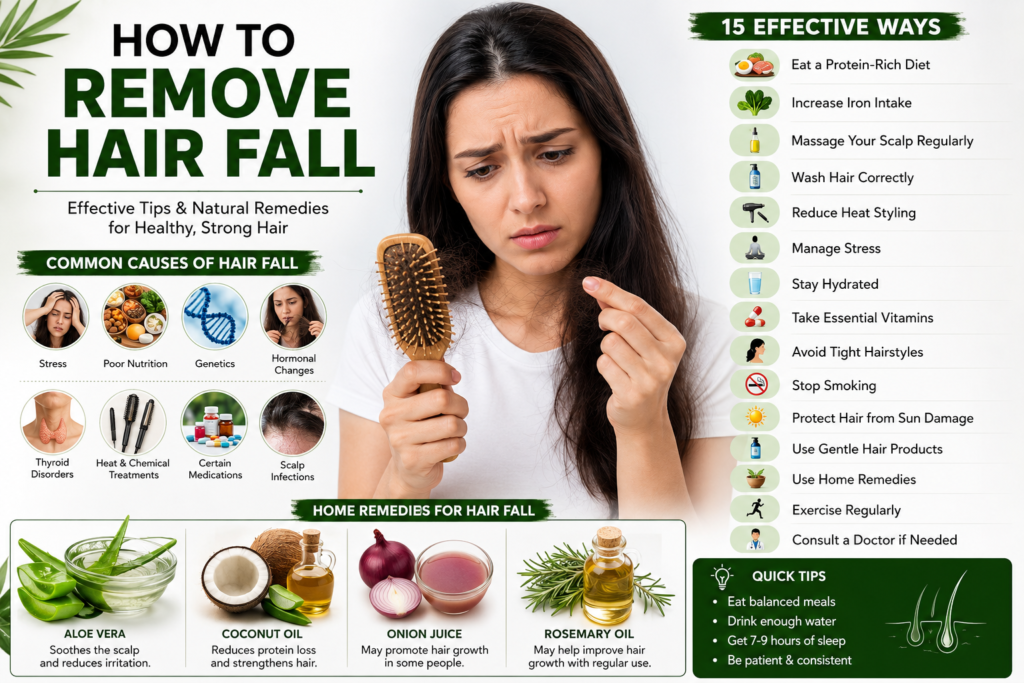
How to Remove Hair Fall
Hair fall is one of the most common concerns affecting both men and women. Losing 50–100 hairs daily is normal, but excessive hair loss can be a sign of poor nutrition, stress, hormonal imbalance, genetics, or an unhealthy hair care routine.
The good news is that in many cases, hair fall can be reduced with the right approach. In this article, you’ll learn the most effective methods to reduce hair fall and promote healthy hair growth.
What Causes Hair Fall?
Understanding the cause is the first step toward solving the problem.
Common causes include:
- Genetics (male or female pattern baldness)
- Stress and anxiety
- Poor nutrition
- Vitamin deficiencies
- Hormonal changes
- Thyroid disorders
- Excessive heat styling
- Harsh chemical treatments
- Certain medications
- Scalp infections
1. Eat a Protein-Rich Diet
Hair is made primarily of keratin, a type of protein. Without enough protein, hair becomes weak and breaks easily.
Include foods like:
- Eggs
- Chicken
- Fish
- Lentils
- Beans
- Greek yogurt
- Nuts
- Tofu
2. Increase Iron Intake
Iron deficiency is one of the leading causes of hair loss, especially in women.
Iron-rich foods include:
- Spinach
- Red meat
- Pumpkin seeds
- Chickpeas
- Kidney beans
Pair these foods with vitamin C for better absorption.
3. Massage Your Scalp Regularly
A daily scalp massage improves blood circulation and may stimulate hair follicles.
Use:
- Coconut oil
- Rosemary oil (properly diluted)
- Almond oil
- Argan oil
Massage gently for 5–10 minutes.
4. Wash Hair Correctly
Washing too often or using harsh shampoos can damage your scalp.
Tips:
- Use a mild sulfate-free shampoo.
- Wash 2–3 times per week unless your scalp is very oily.
- Avoid hot water.
- Rinse thoroughly.
5. Reduce Heat Styling
Frequent use of:
- Hair dryers
- Straighteners
- Curling irons
can weaken hair and increase breakage.
Let your hair air dry whenever possible.
6. Manage Stress
Stress can trigger temporary hair shedding.
Helpful stress-reduction methods include:
- Meditation
- Yoga
- Walking
- Deep breathing
- Getting enough sleep
Aim for 7–9 hours of sleep every night.
7. Stay Hydrated
Dehydration affects scalp health.
Drink at least 2–3 liters of water daily depending on your activity level and climate.
8. Take Essential Vitamins
Healthy hair needs several nutrients.
Important vitamins include:
- Biotin
- Vitamin D
- Vitamin B12
- Zinc
- Iron
- Omega-3 fatty acids
Only take supplements if advised by a healthcare professional or if a deficiency is confirmed.
9. Avoid Tight Hairstyles
Constant pulling from:
- Tight ponytails
- Braids
- Buns
can lead to traction alopecia.
Wear looser hairstyles whenever possible.
10. Stop Smoking
Smoking reduces blood flow to the scalp and may contribute to hair thinning.
Quitting smoking benefits both your hair and your overall health.
11. Protect Hair from Sun Damage
Excessive UV exposure can dry and weaken hair.
Use:
- Hats
- Scarves
- UV-protective hair products
when spending long periods outdoors.
12. Use Gentle Hair Products
Choose products that are free from:
- Sulfates
- Parabens
- Excess alcohol
Look for shampoos designed for strengthening or thinning hair if appropriate for your needs.
13. Home Remedies for Hair Fall
Some natural remedies may help improve scalp condition and hair strength.
Popular options include:
Aloe Vera
Helps soothe the scalp and may reduce irritation.
Coconut Oil
Reduces protein loss and conditions hair.
Onion Juice
Some small studies suggest it may promote hair growth in certain people, but evidence is limited and the odor can be strong.
Rosemary Oil
Research suggests diluted rosemary oil may help with some types of hair loss when used consistently.
Always do a patch test before trying a new topical remedy.
14. Exercise Regularly
Physical activity improves blood circulation and supports overall health.
Aim for at least:
- 30 minutes
- 5 days a week
15. Consult a Doctor if Hair Loss Is Severe
See a healthcare professional if:
- Hair falls out in large clumps.
- You notice bald patches.
- Hair loss starts suddenly.
- You have scalp pain, redness, or itching.
- Hair fall continues for several months despite self-care.
A doctor may recommend blood tests or treatments depending on the underlying cause.
Common Mistakes That Increase Hair Fall
Avoid these habits:
- Overwashing your hair
- Using very hot water
- Excessive coloring or bleaching
- Frequent heat styling
- Crash dieting
- Skipping meals
- Tight hairstyles
- Rough towel drying
Frequently Asked Questions
Can hair fall be stopped completely?
Not always. Some hair loss, such as genetic pattern baldness, may not be fully reversible, but many cases caused by stress, nutritional deficiencies, or illness can improve with appropriate treatment and healthy habits.
Which vitamin is best for hair growth?
Hair health depends on several nutrients, including biotin, vitamin D, iron, zinc, and vitamin B12. The best supplement depends on whether you have a deficiency.
Does oiling stop hair fall?
Oiling can reduce hair breakage and keep hair moisturized, but it does not treat every cause of hair loss.
How long does it take to reduce hair fall?
Many people notice improvement after 2–3 months of consistent healthy habits, though results vary depending on the cause.
Final Thoughts
Hair fall is a common problem, but it is often manageable. A balanced diet, proper hair care, stress management, and attention to any underlying medical conditions can all help reduce excessive hair shedding and support healthier hair over time.
If your hair loss is persistent, severe, or accompanied by other symptoms, consult a qualified healthcare professional for an accurate diagnosis and personalized treatment plan.